I have not seen the cartoons which are said to ridicule the prophet Mohamed, but I have no sympathy for those who are complaining. If Islam is so weak in its adherents' minds that it cannot stand up to some lampooning, it cannot be worth much to them. The reaction shows that the complainants value Islam only for the emotional security it gives, and not for any truth it may purvey. This can be said about any religion.
Caricature is but one method of attacking pomposity and falsity. It seems to be the most effective, for it draws more fire from Muslims than even the most vitriolic direct attacks, which can easily be ignored.
Monday, January 30, 2006


Friday, January 27, 2006
An excellent comment on the Palestinian election, from The Guardian,27 Jan 2006
The Palestinians' democratic choice must be respected
The excuses given for refusing to deal with Hamas will not wash. This is a chance for Europe to have an independent role
Jonathan Steele
Friday January 27, 2006
Guardian
Hamas's triumph in Wednesday's Palestinian elections is the best news from the Middle East for a long time. The poll was a more impressive display of democracy than any other in the region, outstripping last year's votes in Lebanon and Iraq both in turnout and the range of views that candidates represented.
Whereas in Iraq parties that opposed the occupation had to downplay or even obscure their views, Palestinian supporters of armed resistance to Israel's expansionist strategies were able to run openly. It is true that Hamas candidates did not make relations with Israel the centrepiece of their campaign. They focused on reform in the Palestinian Authority. But few voters were unaware of Hamas's uncompromising hostility to occupation and its record in fighting it.
Wednesday's election was remarkable also in owing nothing to Washington's (selective) efforts to promote democracy in the Arab world. Instead, it was further proof that civil society in Palestine is more vibrant than anywhere else in the region and that Palestinian politics has its own dynamics, dictated not by outside pressure but the social and economic demands of ordinary people in appalling conditions. Providing a forum to freely express hopes and fears, debate policy and seek agreed solutions is, after all, what democracy is about.
In Israel and Washington reaction to Hamas's victory has been predictably negative. European governments should take a more sensitive view. The first watchword is caution. Applaud the process but don't take issue with the result. While the dust settles and Hamas works out its own priorities for government, Europeans should calmly analyse why Hamas got so much support.
Among several Hamas leaders I met in Gaza last summer, Mahmoud Zahar, one of its last surviving founders, exuded the clearest sense of inner steel. Trained as a medical doctor in Cairo, and now a short middle-aged figure with combed-over grey hair, he left several impressions. This is no mosque-driven revolutionary or wealthy jihadi of the Osama bin Laden type, motivated by ideology or a desire for adventure. Like other Gazans, he has felt the occupation on his skin. His wife was paralysed and his eldest son killed by an Israeli F-16 attack on his house in 2003. Zahar was in the garden and lucky to survive. In spite of that, he took the lead last year in persuading colleagues that Hamas should declare a truce or period of "calm" with Israel. For 11 months no Hamas member has gone on a suicide bombing mission. That is no mean achievement, which foreign diplomats rarely credit.
Zahar's reasons were not just tactical - a desire to deny Sharon a pretext for abandoning his retreat from Gaza. His strategy is to de-escalate the confrontation with Israel for a long period so that Palestinian society can build a new sense of unity, revive its inner moral strength and clean up its institutions. He feels western governments give aid and use the issue of negotiations with Israel only as a device for conditionality and pressure, not in the interests of justice.
So he wants Palestinians to have a broad-based coalition government that will look to the Arab and Islamic worlds for economic partners and diplomatic support. It's a kind of "parallel unilateralism", matching the mood in Israel where the peace camp clearly has lost all real purchase. "Israeli attitudes show they don't intend to make any agreement. They're going to take many unilateral steps," Zahar told me. "In this bad unbalanced situation and with the interference of the west in the affairs of every Arab country, especially Syria and Lebanon, we can live without any agreement and have a 'calm' for a long time. We're in favour of a long-term truce without recognition of Israel, provided Sharon is also looking for a truce. Everything will change in 10 or 20 years."
Zahar also left me with no sense of embarrassment about the imminence of power. He pointed out that Mahmoud Abbas would remain president for three more years, as though implying he could be a convenient front for inevitably unproductive talks with Washington and Israel while Hamas acted as a watchdog on the main issues. "There will be no contradiction between the Palestine legislative council and the president," he said. "We will be the safeguard, and the safety valve, against any betrayal."
Along with caution in reacting to the Hamas victory, Europe's second priority should be to maintain continuity. Any cut-off in EU aid would only be a gift to Israel's hardliners. The EU is the largest international donor to the Palestinian Authority, and Javier Solana, the EU foreign policy chief, blundered last month when he told a Gaza press conference that "it would be very difficult for the help and the money that goes to the Palestinian Authority to continue to flow" if Hamas were in government.
Yesterday's EU statements were more measured. If Europe, weak though its power may currently be, wants to have an independent role in the Middle East, clearly different from the manipulative US approach, it is vital to go on funding the PA regardless of the Hamas presence in government. Nor should the EU fall back on the cynical hope that Hamas will be as corrupt as Fatah, and so lose support. You cannot use European taxpayers' money to strengthen Palestinian institutions while privately wanting reforms to fail. Hamas should be encouraged in aiming to be more honest than its predecessors.
Above all, Europe should not get hung up on the wrong issues, like armed resistance and the "war on terror". Murdering a Palestinian politician by a long-range attack that is bound also to kill innocent civilians is morally and legally no better than a suicide bomb on a bus. Hamas's refusal to give formal recognition of Israel's right to exist should also not be seen by Europe as an urgent problem. History and international politics do not march in tidy simultaneous steps. For decades Israel refused even to recognise the existence of the Palestinian people, just as Turkey did not recognise the Kurds. Until 15 years ago Palestinians had to be smuggled to international summits as part of Jordan's delegation. It is less than that since the Israeli government accepted the goal of a Palestinian state.
Hamas may eventually disarm itself and recognise Israel. That will be the end of the process of establishing a just modus vivendi for Israelis and Palestinians in the Middle East. It cannot be the first step. Today's priority is to accept that Palestinians have spoken freely. They deserve respect and support.
j.steele@guardian.co.uk
The excuses given for refusing to deal with Hamas will not wash. This is a chance for Europe to have an independent role
Jonathan Steele
Friday January 27, 2006
Guardian
Hamas's triumph in Wednesday's Palestinian elections is the best news from the Middle East for a long time. The poll was a more impressive display of democracy than any other in the region, outstripping last year's votes in Lebanon and Iraq both in turnout and the range of views that candidates represented.
Whereas in Iraq parties that opposed the occupation had to downplay or even obscure their views, Palestinian supporters of armed resistance to Israel's expansionist strategies were able to run openly. It is true that Hamas candidates did not make relations with Israel the centrepiece of their campaign. They focused on reform in the Palestinian Authority. But few voters were unaware of Hamas's uncompromising hostility to occupation and its record in fighting it.
Wednesday's election was remarkable also in owing nothing to Washington's (selective) efforts to promote democracy in the Arab world. Instead, it was further proof that civil society in Palestine is more vibrant than anywhere else in the region and that Palestinian politics has its own dynamics, dictated not by outside pressure but the social and economic demands of ordinary people in appalling conditions. Providing a forum to freely express hopes and fears, debate policy and seek agreed solutions is, after all, what democracy is about.
In Israel and Washington reaction to Hamas's victory has been predictably negative. European governments should take a more sensitive view. The first watchword is caution. Applaud the process but don't take issue with the result. While the dust settles and Hamas works out its own priorities for government, Europeans should calmly analyse why Hamas got so much support.
Among several Hamas leaders I met in Gaza last summer, Mahmoud Zahar, one of its last surviving founders, exuded the clearest sense of inner steel. Trained as a medical doctor in Cairo, and now a short middle-aged figure with combed-over grey hair, he left several impressions. This is no mosque-driven revolutionary or wealthy jihadi of the Osama bin Laden type, motivated by ideology or a desire for adventure. Like other Gazans, he has felt the occupation on his skin. His wife was paralysed and his eldest son killed by an Israeli F-16 attack on his house in 2003. Zahar was in the garden and lucky to survive. In spite of that, he took the lead last year in persuading colleagues that Hamas should declare a truce or period of "calm" with Israel. For 11 months no Hamas member has gone on a suicide bombing mission. That is no mean achievement, which foreign diplomats rarely credit.
Zahar's reasons were not just tactical - a desire to deny Sharon a pretext for abandoning his retreat from Gaza. His strategy is to de-escalate the confrontation with Israel for a long period so that Palestinian society can build a new sense of unity, revive its inner moral strength and clean up its institutions. He feels western governments give aid and use the issue of negotiations with Israel only as a device for conditionality and pressure, not in the interests of justice.
So he wants Palestinians to have a broad-based coalition government that will look to the Arab and Islamic worlds for economic partners and diplomatic support. It's a kind of "parallel unilateralism", matching the mood in Israel where the peace camp clearly has lost all real purchase. "Israeli attitudes show they don't intend to make any agreement. They're going to take many unilateral steps," Zahar told me. "In this bad unbalanced situation and with the interference of the west in the affairs of every Arab country, especially Syria and Lebanon, we can live without any agreement and have a 'calm' for a long time. We're in favour of a long-term truce without recognition of Israel, provided Sharon is also looking for a truce. Everything will change in 10 or 20 years."
Zahar also left me with no sense of embarrassment about the imminence of power. He pointed out that Mahmoud Abbas would remain president for three more years, as though implying he could be a convenient front for inevitably unproductive talks with Washington and Israel while Hamas acted as a watchdog on the main issues. "There will be no contradiction between the Palestine legislative council and the president," he said. "We will be the safeguard, and the safety valve, against any betrayal."
Along with caution in reacting to the Hamas victory, Europe's second priority should be to maintain continuity. Any cut-off in EU aid would only be a gift to Israel's hardliners. The EU is the largest international donor to the Palestinian Authority, and Javier Solana, the EU foreign policy chief, blundered last month when he told a Gaza press conference that "it would be very difficult for the help and the money that goes to the Palestinian Authority to continue to flow" if Hamas were in government.
Yesterday's EU statements were more measured. If Europe, weak though its power may currently be, wants to have an independent role in the Middle East, clearly different from the manipulative US approach, it is vital to go on funding the PA regardless of the Hamas presence in government. Nor should the EU fall back on the cynical hope that Hamas will be as corrupt as Fatah, and so lose support. You cannot use European taxpayers' money to strengthen Palestinian institutions while privately wanting reforms to fail. Hamas should be encouraged in aiming to be more honest than its predecessors.
Above all, Europe should not get hung up on the wrong issues, like armed resistance and the "war on terror". Murdering a Palestinian politician by a long-range attack that is bound also to kill innocent civilians is morally and legally no better than a suicide bomb on a bus. Hamas's refusal to give formal recognition of Israel's right to exist should also not be seen by Europe as an urgent problem. History and international politics do not march in tidy simultaneous steps. For decades Israel refused even to recognise the existence of the Palestinian people, just as Turkey did not recognise the Kurds. Until 15 years ago Palestinians had to be smuggled to international summits as part of Jordan's delegation. It is less than that since the Israeli government accepted the goal of a Palestinian state.
Hamas may eventually disarm itself and recognise Israel. That will be the end of the process of establishing a just modus vivendi for Israelis and Palestinians in the Middle East. It cannot be the first step. Today's priority is to accept that Palestinians have spoken freely. They deserve respect and support.
j.steele@guardian.co.uk
Monday, January 02, 2006
A trip into the past - with updates. A large part of this information, except of course the photos, I have got from public records via the internet.
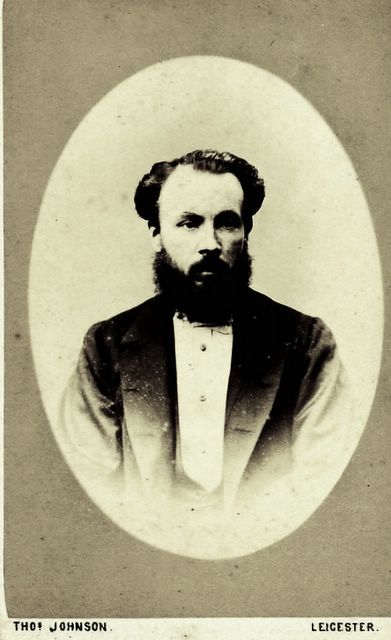
Augustus Kirk 1838-1923

I've been delving into the lives of some of my ancestors recently. My grandfather Augustus Kirk was born in 1838 and he had a milliner's shop in Leicester, a fair sized city in the English midlands. His shop was in the High Street, employing ten assistants and an apprentice. He also employed a general servant and a nursemaid.
Augustus married Clara Weston,
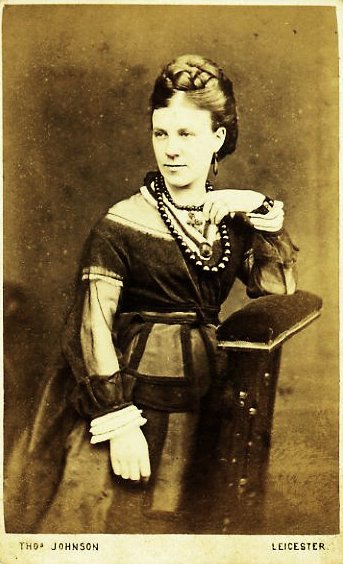
Clara Kirke (nee Weston) 1844-77
a pretty woman six years younger than him, in September 1874 and had two children – my father and his younger sister Iva. I have no photo of Iva, but here is my father:

Cecil Kirke about 1876
Dad was born in June 1875 and his sister Iva in May 1877.
Sadly, Augustus' young wife Clara died less than a month after giving birth to Iva – perhaps from puerperal fever, a common thing in those days. Augustus was left with the task of bringing up two very small children with the assistance of their nursemaid Eliza Adams.
Fortunately for him and for the children, Augustus' sister Olivia,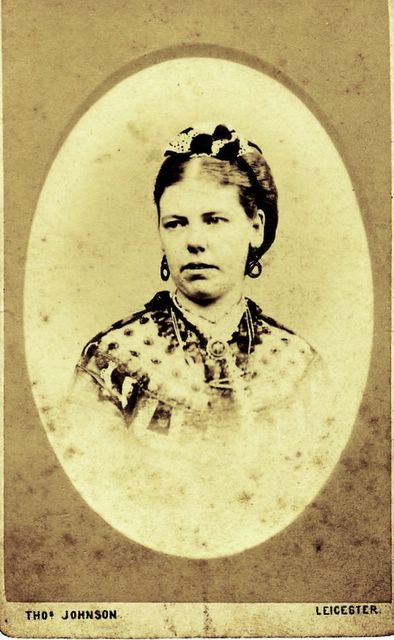
Olivia Kirke, 1837-1909 (later Olivia Gilson).
a year or two older than him at age 40, lived with them, and she took over the mothering. Olivia was unmarried, although a good looking woman, and the family grew up over the shop in Leicester High Street until my father was thirteen, when Olivia then aged almost 52, received a proposal of marriage from a well-to-do farmer in Twyford, a village a few miles out of Leicester. His name was John Doughty Gilson, a widower then aged about 67, whose first wife, Catherine (known as "Kate") had died the year before aged 64, having given him five children.
John Doughty Gilson about 1870-80
and he farmed 170 acres of land with the assistance of five labourers and a boy.
Olivia and John were married in early 1889, and my father and his sister Iva moved out of Leicester to live in the farm house at Twyford with Olivia and her husband.
Here it becomes complicated. It is possible that John D. Gilson was a cousin of Augustus, as his great-grandmother was Mary Doughty and Augustus' great-aunt Catherine Kirk, daughter of Mary Doughty, born 1788, married one William Gilson, born 1780. John may well have been the son of William Gilson (the evidence for this is purely circumstantial, but the name "Doughty" supports this). John would then have been Olivia's first cousin once removed, or “niece in cousinhood” as they say in some parts of the world, and John's sons would be Olivia's second cousins.
To back up this speculation, Catherine died in Twyford on 9 April 1865. Olivia's great-aunt may have become her mother-in-law!
Olivia's marriage did not last long. Tragedy again overtook the family and John Gilson died after less than a year of marriage, leaving his sons Arthur, Alfred and Herbert (young men in their twenties) and, possibly, a daughter, of who I have a photo captioned, tantalisingly, “S. Gilson”. That this young woman is John Gilson's daughter is guesswork on my part.
Selina Gilson
In this photo she is a pretty young woman (difficult to guess her age), and I can find no other information about her. I am guessing that her first name was probably Sarah, as there were many Sarah Gilsons around that neighbourhood at that time.
Note: Since I wrote that last sentence, I have found out that John D. Gilson had two daughters; one, Selina, born in 1858. this would make her about 20 when the photos were taken, and fits exactly with them, so I am sure she is John's daughter - Olivia's stepdaughter and Dad's step-cousin.
Selina married twice, but so far as I can find out had no children. Her first husband was a lace maker from Nottingham, John Steere Hardy, and she lived with him in Nottingham for fourteen years. After he died in late 1891, she married again two years later to James Neville Tompson, a commercial traveller in timber, also living in Nottingham, and she lived there with him. Less than six years later she died aged just 42 and was buried in Wollaton Road Cemetery. She was my second cousin twice removed.
I also found out that John was described in the 1851 census as a "farmer of 83 acres employing 2 labourers", and in the1871 British census as a "grazier, 80 acres". So he had expanded his farming business by 90 acres and several men in the ten years between 1871 and 1881.
Here is another photo of Selina: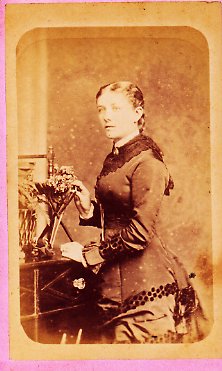
Selina Gilson about 1870-80
After her husband's death Olivia and the two children returned to Leicester and in 1891 they were living with Augustus at 19 St. Nicholas Street, Leicester. I guess the two sons had been bequeathed the farm, and probably John had left Olivia some money. Augustus had evidently sold his millinery business and was "living on independent means" according to the 1891 Census report. He does not seem to be employing any live-in servants, but a niece of his wife, Florence Mastyn or Mastin, aged 23, is living with them as housekeeper
Some time between 1891 and 1901 Augustus, Olivia and Iva moved to 39, Nightingale Lane, Streatham (then a suburb of London), where Olivia died on 19 October, 1909, aged 72.
Dad's sister Iva married a clergyman, John Anthony Sturton, and he obtained the position of Vicar at Market Lavington in Wiltshire (his father was a clergyman, too.) I still have a pocket Bible he gave me as a christening gift. They lived in the big Vicarage house in the village, and Augustus moved there (I don't know the exact date) and the Vicarage became home for my father's children by his first marriage - though they did visit him in China on occasion. Augustus died there in 1923 and was buried in St. Mary's churchyard there. I still remember that big old house in its large garden: in about 1978 it appeared much as it had been in my childhood forty years earlier; but the Vicar's residence is now elsewhere.
Dad went on to join the China Consular Service in 1898, first as an interpreter, later appointed vice-consul and in due course posted to many different towns in the course of the years 1906-1932 finishing his career as Consul-General for the provinces of Yunnan and Kweichow. from 1927-1932.
He married first Mabel Wilson from Alnwick, Northumberland: she died at sea in 1927 after giving him two sons and two daughters; two years after her death he married my mother, Sybil Sandys, a missionary working for the Church Missionary Society and a descendant of the seafaring families of Hood and Nelson. I was born in China and left that country at the age of two.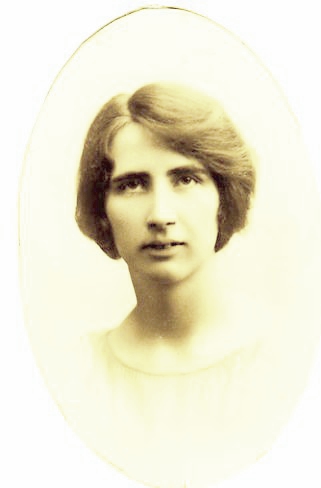
Sybil Kirke (nee Sandys) 1900 - 1989
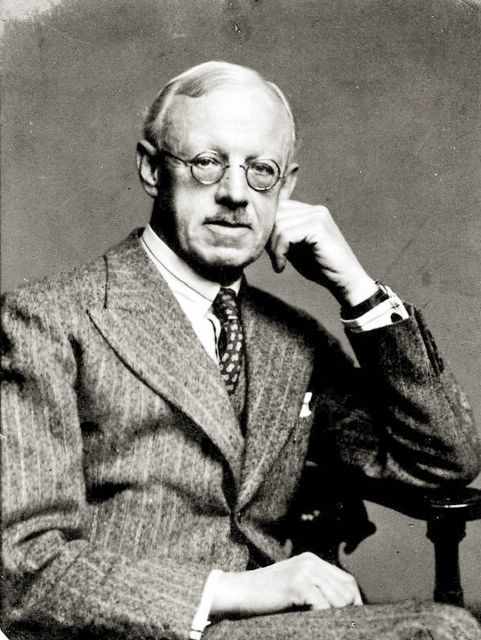
Cecil Kirke about 1938
Dad retired in 1932, and died in 1959. His beloved sister Iva, with whom he had a closer and more durable relationship than with either of his wives, died a year before him and he told my mother shortly before his death that he was not afraid to die, as his sister Iva had appeared to him and she had told him she was waiting for him. He was buried in the churchyard at Market Lavington near his father's grave.
To finish off, here is a photo of my great-grandfather William Henry Kirk, Augustus' father:

William Henry Kirk 1809-1872
There is also some more information that has come to hand about my great-grandfather William Henry Kirk. In the 1861 census he is described as "Artist and Woolsorter", living at 20, Friar Lane, Leicester. Wool production was a substantial industry in Leicestershire at that time. Probably John D. Gilson had many sheep.His two children and his "niece" (probably 2nd cousin once removed) Ellen (or Eleanor) lived there with him.
Tuesday, December 27, 2005
(email me if you want info on how to use EFT, where to tap etc.)
Using EFT for Money, Abundance & Success
Using EFT for Money, Abundance & Success
Dr. Carol Look provides us with a remarkable foundational article on using EFT to help create financial abundance in our lives. It is rich in concepts and specific language to use.
I have read more than 20 books on the subject of attracting abundance, trying to figure out the trick to having (“manifesting”) more of what I want in my life. What I learned was that money is just another form of energy, and that there is a particular VIBRATION associated with abundance. While I understood the concepts, nothing ever changed when I “applied” what I had learned. It was not until I combined the book knowledge with EFT and the energy of love and gratitude that I was able to change my limiting beliefs, expand my comfort zones, neutralize my deserving issues , direct my feelings and expand my prosperity consciousness---all of which had been driving the results in my life. Using EFT, I was able to change my VIBRATION in my daily life around money, worry, and the future, which in turn opened the door for success and abundance.
Over the past few years, I have conducted seminars and some teleclass series covering the topic “EFT for Success and Abundance.” The blocks and themes keep recurring, as do the progress reports of people that persistently use tapping for abundance in their lives. Below are some of the themes that need to be addressed.
COMFORT ZONES: When I first started using EFT for success in my own life, I didn’t “believe” in comfort zones---what Gary refers to as ceilings on your progress based on the “writing on your walls.” When I noticed my income for two years running was exactly the same, I realized this was evidence of a comfort zone operating in my financial life.
This may not seem strange unless you are a private practitioner in the mental health field. There are so many variables---holidays that fall on different days of the week, my own vacation time, clients’ vacation time, illness, referrals, the economic situation etc--- that it is virtually impossible to predict your annual income. Two years in a row, despite all these variables, I made the exact (within $1000) same income working as a full time private practitioner. Once I used EFT to break through these comfort zones (after some resistance of course) my income shot up over 20% the next year. I had not raised my fee, had not done any advertising, and the country’s economic situation had in fact worsened. I used phrases such as:
“Even though I don’t dare raise my income, I deeply and completely accept myself…
“Even though I obviously have a block to earning more than $ XXX, I deeply and completely love and accept this conflict.”
“Even though I have trouble seeing myself earning more than $ XXX, I deeply and completely accept myself.”
“Even though I don’t feel safe making more than $ XXX because they’ll be jealous, I deeply and completely accept and love who I am.”
LIMITING BELIEFS: Dozens of clients in my abundance classes have told me that they had siblings who were seen as either “slow learners” or having some form of “difficulty” in school. Some of these siblings turned out to be brilliant while some are still struggling to this day. The point is that my clients learned from their families “I’m not supposed to shine” and that if they did shine, they were taking attention away from their struggling sibling. It didn’t seem to matter if the sibling was older, younger, the same sex or not. What mattered was that the parents compared the two, and scolded the “fast learner” for looking good, or “showing off.” The message was “don’t succeed or you’ll hurt someone else.”
“Even though I’m not supposed to shine because it will hurt my sister, I deeply and completely accept my brilliance.”
“Even though I will lose their approval if I do well, I deeply and completely accept my talents.”
“Even though it’s not safe to succeed, I choose to feel safe when I am doing what I love.”
“Even though they don’t feel comfortable when I succeed, I deeply and completely accept myself anyway.”
“Even though I’ll never forget his scolding me when I succeeded, I deeply and completely forgive myself be being so fast.”
“Even though I’m afraid I’ll be rejected if I succeed…”
Other common limiting beliefs that block financial wealth are prejudices against wealthy people. “Fran” told me she thought rich people were “shallow and mean.” Apparently her mother had taught her this concept, based on feelings of jealousy and a scarring incident with a neighbor when growing up. Fran adopted this belief, but was unaware that she could therefore never BETHOSE PEOPLE) for if she became one, she would not only be seen as shallow and mean (her assumption), more importantly, she would risk the deep disapproval of her mother (her deepest fear). These prejudices about wealthy people come in all shapes and sizes. They must be uncovered and treated with EFT if you want to improve your financial situation. rich, (one of
“Even though I’m convinced ALL rich people are mean and shallow…”
“Even though she’ll judge me if I make more money…”
“Even though I’m afraid to be successful because my mother will reject me…”
“Even though I’ll be envied too much if I’m rich…”
DESERVING ISSUES: I have many individual clients who feel guilty when they have desires to do well financially. When I asked “Jeff” why, he said that he already “had it good” because his father worked hard to educate him and he was a superb athlete… “why should I take more away from other people?” (1) The belief that his success would hurt someone else is a mistake. (2) The belief that there is a limited supply of abundance is also, in my opinion, off base. (3) As long as he thinks he has had “his share” he will sabotage progress or inadvertently reject opportunities. Jeff didn’t feel deserving of financial success, and was finally able to see a pattern of rejecting terrific opportunities for advancement in his job. He realized he was working hard to tread water, just making ends meet, much like friends of his who struggled with comfort zone issues in sports.
“Even though I don’t deserve any more, I’ve had enough, I deeply and completely accept myself anyway.”
“Even though my mother said we were lucky to have what we had, I deeply…
“Even though I don’t want to be selfish and take more than my share, I accept and love myself for having desires.”
“Even though my father scolded me for wanting more, I deeply and completely…”
PROSPERITY CONSCIOUSNESS: Whether you believe you don’t have enough time, money, love or success, the consciousness behind your belief will block you from receiving financial abundance. Your level of belief exudes a particular vibration. In energetic terms, the theory states that your consciousness about abundance has a certain capacity; you will receive exactly what your consciousness is capable of handling. The good news is that your consciousness can be expanded to believe there is enough to go around.
“Even though there was never enough money when I was a kid, I deeply and completely accept my fears.”
“Even though I remember the fight my parents had about money, and I think money is bad, I deeply…”
“Even though I’m afraid there won’t be enough, so I need to hold on tight, I deeply and completely accept who I am.
“Even though she told me there wasn’t enough, I choose to believe there is enough now.”
FEELINGS: Do you feel rich? If not in your bank account, do you at least feel rich in love or compassion or some other way? My point is you can’t get rich if you feel poor. So you will need to find some way of FEELING rich in your life. Notice the abundance in nature, or notice how many clients you do have, or how many good friends are in your life. However you do it, you must change the vibration you have and feel wealthy on an emotional level.
“Even though my father said we would always be poor, I choose to remember how much love I feel.”
“Even though I feel poor and anxious about money, I deeply and completely accept these fears.
“Even though my mother taught me it was better to be poor, I love and accept her anyway.”
Combining EFT with the energy of love and gratitude has contributed to huge payoffs in my life and the lives of my clients. EFT was the missing piece all along. Believe in PLENTY… THERE IS ENOUGH!
Carol Look
Monday, December 26, 2005
How absurd can the RC Church get?
December 26, 2005
Backers Join Ousted Priest in 'Illicit' Mass
By THE ASSOCIATED PRESS
Backers Join Ousted Priest in 'Illicit' Mass
By THE ASSOCIATED PRESS
ST. LOUIS - At least 1,500 people attended Christmas Eve Mass with an excommunicated Roman Catholic priest presiding, despite warnings from the archbishop that participating would be a mortal sin.
The Rev. Marek Bozek left his previous parish without his bishop's permission and was hired by St. Stanislaus Kostka Church this month. As a result, Father Bozek and the parish's six-member lay board were excommunicated last week by Archbishop Raymond Burke for committing an act of schism.
Archbishop Burke said it would be a mortal sin for anyone to participate in a Mass celebrated by a priest who was excommunicated.
The archbishop, who could not stop the Mass, said it would be "valid" but "illicit."
Despite the warning, Catholics and others from as far as Oregon and Washington, D.C., filled the church. An overflow crowd viewed the Mass by closed-circuit television in an adjoining parish center.
"I'm not worried about mortal sin," said Matt Morrison, 50, a worshiper.
"I'll take a stand for what I believe is right," Mr. Morrison said.
Many wore large red buttons reading "Save St. Stanislaus" and said they wanted to offer solidarity to a parish that they believed had been wronged.
When Father Bozek entered from the rear of the church, the congregation rose and greeted him with thunderous applause.
"It was magic," said JoAnne La Sala of St. Louis, who described herself as a lapsed Catholic. "You could feel the spirit of the people."
The penalty of excommunication was the latest wrinkle in a long dispute over control of the parish's $9.5 million in assets.
The parish's property and finances have been managed by a lay board of directors for more than a century. Archbishop Burke has sought to make the parish conform to the same legal structure as other parishes in the diocese. As a result, he removed both the parish's priests in 2004.
Father Bozek, a Pole who came to the United States five years ago, said he agonized about leaving his previous parish but wanted to help a church that had been deprived of the sacraments for 17 months.
Monday, December 19, 2005

Sunday, December 18, 2005
Young love
The secret love life of Laura-Anne, aged 9¾
Guardian Unlimited © Guardian Newspapers Limited 2005
Channel 4 faces fresh controversy over fly-on-the-wall film of pre-teen romance (Channel 4 is a British TV channel)
Lorna Martin and Nell Card
Observer (newspaper)
'Tingly,' she says, dreamily. 'He used to come over and cuddle me and put his hands up my top. It used to feel cosy. I feel desperate to go up to him and say "Ben, why don't we kiss any more". It hurts so much that we don't kiss that I want to rip my heart out and throw it away.'
Laura-Anne, from Siddick, a two-street village near Workington in Cumbria, is nine years old.
Next year she will become a star as the main character in a fly-on-the-wall documentary about the sexual awakening of Britain's pre-teens, with her every thought pored over by television critics and sociologists. The makers of How To Fall In Love, due for broadcast by Channel 4 in the new year, spent two years following the primary school pupil and her friends as they discovered the opposite sex.
The Observer has seen the film. To some it will be a sweet and tender portrayal of childhood love, while others will rage against the increasingly sexualised world in which children grow up.
Laura-Anne is shown massaging 11-year-old Steven Hilland while he watches TV and eats crisps. Asked later about the scene, she tilts her head coquettishly and says: 'Sometimes I dig my nails in and scratch him hard.'
'I love it when you do that,' Steven replies with a grin.
In another scene, a heartbroken Laura-Anne shakes her head in disbelief as she reads a 'Dear John' letter penned by her 'first love'. 'It is hard for me to write this letter,' states Ben Challenger, aged 10. 'But I think we should have some time apart, because Steven is forcing me to go out with you and it doesn't feel right.'
In one of the most contentious scenes, two 10-year-olds are seen energetically participating in the kind of kissing normally undertaken behind the school bike shed. It has prompted a debate about the ethics of using potentially vulnerable children as documentary subjects, with one parent saying he felt that his son had been 'exploited and manipulated'.
'I'm not suggesting he was made to do anything he didn't want to do,' Steven Hilland said about his son, also Steven. 'But he was definitely encouraged by promises of burgers, go-karting and ice-skating. He didn't want to have a full-on snog with his girlfriend in front of the cameras, but he said he was persuaded to, and now he is embarrassed about everyone seeing it.'
Marc Isaacs, the acclaimed director of the film, admitted that some of the scenes, including the one Hilland mentioned, involved 'set up' shots, but insisted it was an accurate portrayal of what he witnessed during the two years he spent following the children. 'At first they were very excited, but then quickly got bored of the filming,' said Isaacs, who won the Grierson directorial award for best newcomer in 2002.
'We spent two years with them, because I didn't want this to be a surface portrait - so of course we took them to the pictures and bought them lunch and gave them Christmas and birthday presents. We did intervene and create scenes, but all the things that happened are completely true.'
Siddick, where the documentary was shot, is surrounded on one side by an enormous paper factory and on the other by a row of wind turbines. Visitors are welcomed by signs reading 'Please Die Carefully'. Once a busy mining area, it is now plagued with high unemployment. Despite this, there is a palpable sense of trust and community. Doors are left unlocked and children play outside until late in the evening. Now there is much talk about the impact the film, to be shown at a special screening in the local cinema on Tuesday, might have on the village and its residents.
Laura-Anne, who is now 11, Ben, 12, and Steven, 13, have mixed feelings. 'Most people my age think about boys and falling in love all the time,' said Laura-Anne. 'It is good to make a film about it rather than pretend it doesn't happen.'
'You have to have a girlfriend,' said Ben. 'Otherwise you just get wound up and people think you're not attractive.'
Although the programme is not sexually explicit, Steven told The Observer he first had full sex when he was 11, and had been several times to the family planning clinic. All the children said they had their first 'proper kiss with tongues' when they were six or seven.
This month The Observer revealed plans to introduce compulsory sex lessons for primary school children as young as five. Although the government later distanced itself from the report, which sparked fury among some church groups, there is growing support for sex education to begin much earlier.
Janice Hanrahan, Laura-Anne's mother, said: 'It can be very uncomfortable to see your nine-year-old on TV talking about being in love but it actually reminded me of having those feelings at a similar age. You simply forget as you grow up.
'People who say they want to keep children safe and innocent for as long as they can are fooling themselves. If children are not given sex education at home or in school, they will gather their impressions anywhere and everywhere: from explicit prime-time television jokes, soaps, magazines and the net.'
While many parents will be horrified at the thought of their pre-pubescent children engaging in any kind of sexual activity, some experts argue that we are all sexual beings, that children learn about touch and loving relationships from day one and that parents need to be comfortable talking about sexuality with their children early on.
Others expressed concern about a film showing nine-year-olds as sexually curious. 'There is already so much pressure on children to grow up,' said Mallory Hensen, a senior educational psychologist with Milton Keynes council.
'We hear about young girls wearing Playboy T-shirts and G-strings. We are already sexualising children far too much and treating them as young adults.'
Subscribe to:
Posts (Atom)